
Programmable building-block robots are one of the most reliable categories in the toy and STEM market. They combine a building kit with a detailed mechanical model. Some are driven by a remote or a phone app; others — the Enzo V12 engine and the transmission kits — are display builds with no remote, no motor and no power unit. They sell to parents, schools, hobbyists and gift buyers, and they have a longer shelf life than a typical toy because the building itself is part of the product. A child who finishes building a robot does not put it in a cupboard. They play with it. And a parent who watches a child build a detailed engine is a parent who will buy the next kit.
This guide explains what these kits are, why they sell, and what to check before ordering in bulk. It also covers something most guides leave out: how a building-block robot fits into a wider wholesale electronics range, and why it sells better alongside drones, cameras and wearables than it does on its own. The full range is listed in the programmable toys category on the QDD shop.
What is a building-block robot?
A programmable building-block robot is a construction kit — interlocking blocks, gears and axles — that assembles into a model: an engine, a vehicle, a robot or a machine. Once built, some models are controlled by a remote or a phone app. Others are display builds: the model is the finished product, with no remote, no motor and no power unit.
There are three broad types, and the difference matters for how you list them.
Remote-control kits. The model is driven with a physical remote. This is the most common type, and the simplest to use. The dual-remote robot kit ($17.99) is an example: a robot built from blocks, driven by two remotes and a phone app with simple block-based programming. The buyer builds the robot, then drives it. It is straightforward, it works out of the box, and the APP adds programming without needing a separate computer.
App-control kits. The model connects to a phone app over Bluetooth, which adds programmable functions — preset movements, speed control and, in some kits, simple block-based programming. App control is a selling point for STEM and education buyers, because it turns a toy into a teaching tool. But it also means the buyer needs a compatible phone, so state the requirement in the listing. A customer who buys an app-controlled kit and then finds their phone does not support it will be disappointed — and that disappointment costs you the relationship, not just the sale.
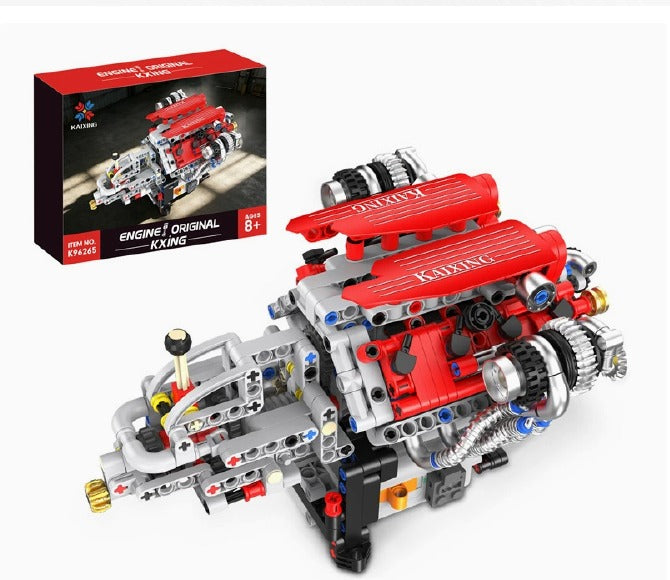
Display-build kits. A third type worth knowing is the display build — a detailed model with no remote, no motor and no power unit. The Enzo V12 engine model ($36.99, 1,610 pieces) and the 730-piece and 809-piece transmission kits ($19.99 each) are display builds. The buyer builds the model and puts it on a shelf. There is no remote to lose and no battery to charge, which is part of the appeal for collectors and gift buyers. A student who builds a gearbox sees how the gears fit together in a way that reading about it never teaches.
The word “programmable” deserves a note. Some kits are genuinely programmable — the buyer can set a sequence of movements, or write simple block-based code. Others are remote-controlled and the word “programmable” is used loosely to mean “it does things when you press buttons.” Before you list a kit, find out which one it is. If it is genuinely programmable, say so, because that is a real selling point for STEM buyers. If it is remote-controlled, say that, because a STEM buyer who expects programming and gets a remote will feel misled.
Why they sell
Three buyers drive this category, and each buys for a different reason. Understanding the three buyers is the key to listing the products well, because each one looks for different information.
Parents and gift buyers. A building-block robot is a gift that takes time to build and then keeps working. It suits birthdays and holidays, and it is an easier gift to justify than a screen-based toy. A parent can say, honestly, that the child is learning something — and they are. The building teaches patience and spatial reasoning. The driving teaches cause and effect. The parent does not need to understand the mechanics. They need to know the piece count, the control method and what the finished model does. Put those three things in the first paragraph of the listing.
STEM and education buyers. Schools, clubs and tutors buy these kits to teach mechanics, gearing and basic programming. A kit that shows a real engine or gearbox in detail is more useful in a classroom than a picture, because the students can see how the parts fit together and understand why they fit that way. These buyers care about piece count, about whether the instructions are clear, and about whether the kit can be taken apart and rebuilt — because a classroom kit will be built many times by many hands. They also buy in larger quantities than parents, and they reorder when a kit wears out, which makes them a reliable repeat customer.
Adult hobbyists and collectors. Detailed engine and vehicle models — especially a V12 or a classic car engine — sell to adults who build for the pleasure of it. These buyers care about piece count, detail and accuracy, and they are willing to pay more for a complex kit. They are also the buyers who leave detailed reviews, and a good review from a hobbyist is worth more than any advertising. They will notice if a part is missing or if the instructions are wrong, and they will say so. They will also notice if the model is accurate, and they will say that too.
Because the category serves three different buyers, one listing can reach all of them if the description states the piece count, the control method and what the finished model does clearly. That is the whole trick: the same product, described in a way that lets each buyer see what they need.
What to check before ordering
Remote type
Check exactly what remote is included. Some kits have a single remote; others have two (one for driving, one for extra functions). A “dual remote” kit is a different product from a single-remote kit, and the price reflects it. The dual-remote robot kit ($17.99) is an example of the entry-level dual-remote type. State the remote type in the description, and do not show a second remote in the product photo unless it is in the box. A photo that shows two remotes when only one is included will disappoint the buyer.
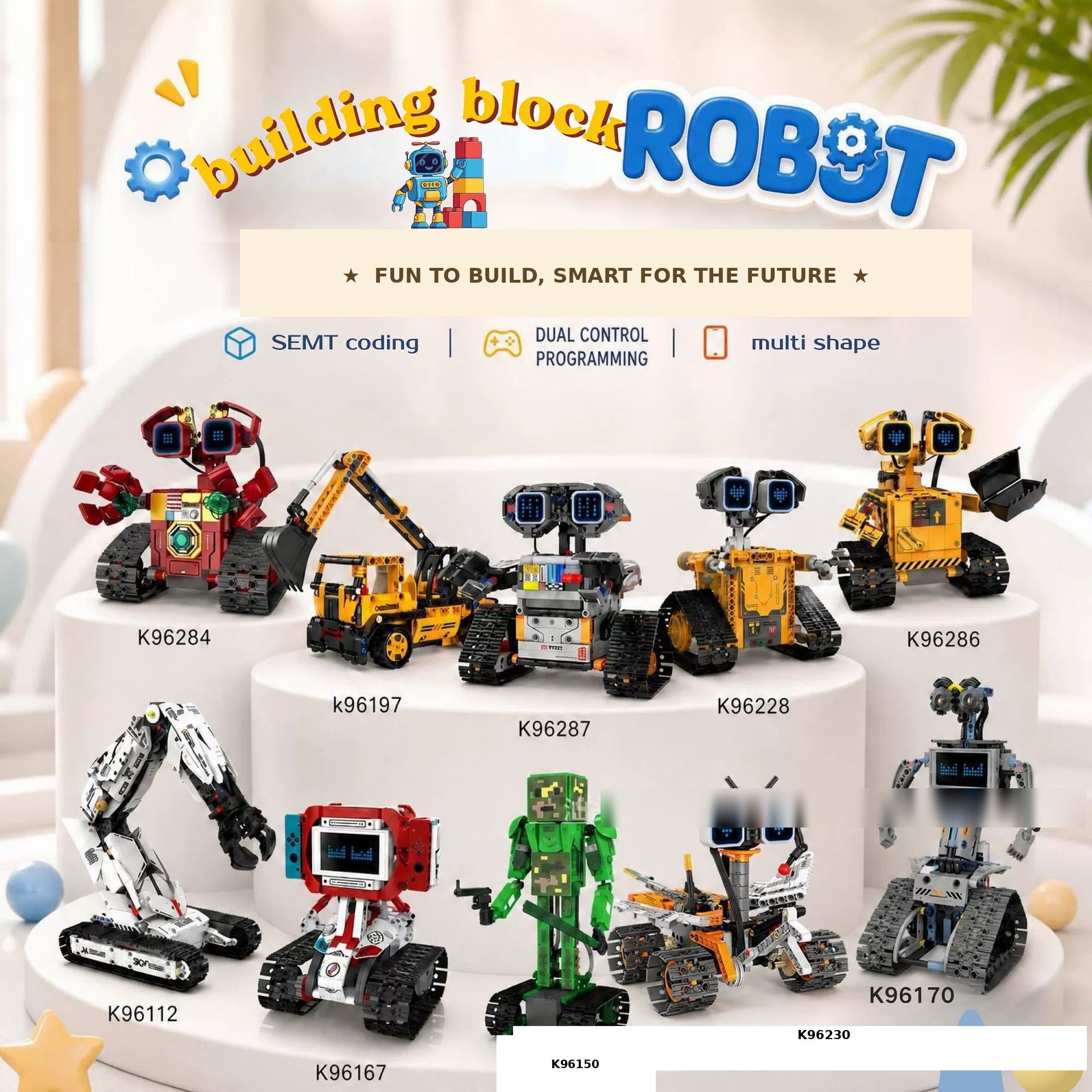
The remote is also worth testing. A remote that feels cheap or has a short range will be the first thing a buyer complains about, because it is the part they touch. When you order a sample, build the kit and drive it with the remote. If the remote is awkward, say so in your own notes, and decide whether it matters for your customers. For a gift buyer, it probably does not matter much. For a hobbyist, it might.
App control — and whether it is actually included
If a kit is advertised as app-controlled, verify that the app control is part of this specific model and not a feature of a different version. Some listings show app control for one variant and a standard remote for another. Confirm which one you are ordering, and state it in the listing.
App control also raises a practical question: which phones does the app support? If the app only works on recent phones, say so. A customer with an older phone who buys an app-controlled kit and cannot use it will be annoyed in a way that a simple remote-control buyer would not be. The app is a feature, but it is also a dependency, and dependencies need to be stated.
Piece count
Piece count is the main indicator of complexity and value. A 730-piece gearbox kit and a 1,610-piece engine model are different products at different prices, and buyers compare them on piece count. State the exact piece count in the listing — it is the first number a hobbyist looks for, and it is also the easiest way to differentiate your products from a competitor’s.
Piece count also tells the buyer how long the build will take, which matters for a gift. A 730-piece kit is an afternoon’s work. A 1,610-piece engine is a weekend’s work. A parent buying for a birthday wants to know whether the child will finish it in a day or whether it will take a week. Put the piece count near the top of the description, not buried at the bottom.
What is in the box — and what is not
Building-block kits sometimes show accessories, display stands or extra parts in the photos that are not included. Before you list a kit, confirm the contents: blocks, motor, remote, batteries (usually not included), and instructions. If batteries are not included, say so — a buyer who has to make a second trip for batteries is a buyer who leaves a bad review.
The instructions deserve a specific mention. A building-block kit lives or dies by its instructions. If they are clear, the build is enjoyable. If they are confusing, the build is frustrating, and a frustrated builder does not recommend the product. When you order a sample, build it yourself and pay attention to the instructions. If a step is unclear, note it. If a part is hard to find, note that too. That is information you can use in the listing — “clear step-by-step instructions included” is a genuine selling point, and it is one that a buyer will appreciate.
Age suitability
State the recommended age in the listing if the product page gives one — it helps gift buyers choose, and it stops a parent buying a 1,610-piece engine for a young child. If the page does not state an age, do not invent one. A parent who buys a kit that is too hard for their child will blame the product, not their own choice. A clear age recommendation prevents that.
Age suitability also matters for schools. A teacher buying for a class needs to know whether the kit suits the age group they teach. If you state the age clearly, the teacher can order with confidence. If you do not, they will ask, and every question is a delay in the order.
Examples from the QDD range
| Product | Price (wholesale) | Piece count | Control | Best for |
|---|---|---|---|---|
| Enzo V12 engine model | $36.99 | 1,610 | Display build (no remote) | Hobbyists, collectors, gifts |
| Transmission gearbox kit (730 pieces) | $19.99 | 730 | Display build (no remote) | STEM, hobbyists, education |
| Transmission gearbox kit (809 pieces) | $19.99 | 809 | Display build (no remote) | STEM, hobbyists, education |
| Dual-remote robot kit | $17.99 | Entry level | Dual remote | Beginners, children, gifts |
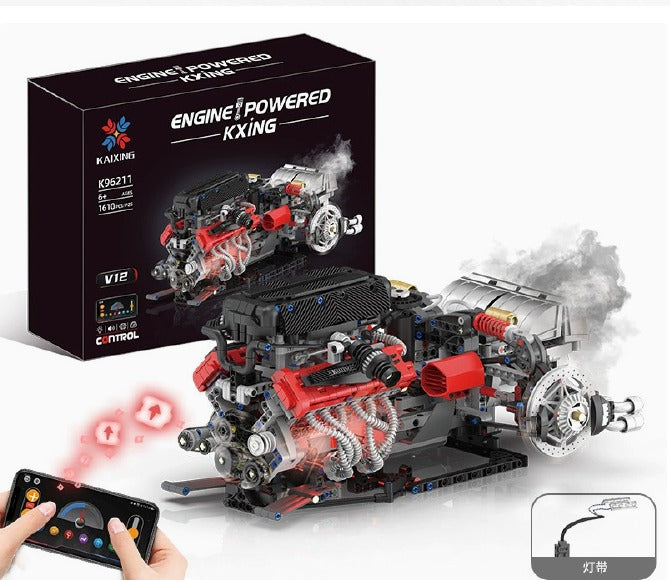
The gearbox kits are the volume end of the range — affordable, demonstrably mechanical, and easy to explain. The Enzo V12 is the premium end — a detailed, display-worthy model that sells as a gift and as a collector’s piece. Stocking both gives you a low price point and a high one in the same category.
At the MOQ of 36 pieces, a full order of the Enzo V12 is $1,331.64, a full order of either gearbox kit is $719.64, and a full order of the dual-remote robot kit is $647.64. The gearbox kits are the easiest place to start: the order value is manageable, the product is easy to explain, and the buyer is easy to find. The Enzo V12 is the model to add once the gearbox kits are moving, because it brings in the hobbyist and collector buyer who will pay more for detail.
Note that the two gearbox kits are listed as variants of one product, not as two separate listings. That is deliberate. A buyer comparing 730 pieces against 809 pieces wants to see the choice in one place. Two separate listings would split the traffic and confuse the buyer. One model, one listing, with variants inside it — that is the rule for this whole range, and it applies to every category in the shop.
Robots as part of a multi-category wholesale range
A building-block robot sells well on its own, but it sells better as part of a wider range. The reason is the buyer. A parent buying a robot for a child is a parent who is already shopping for a gift, and a gift buyer rarely buys one thing. A school buying a gearbox kit for a class is a school that is already buying STEM equipment, and a STEM buyer rarely buys one kit. All of the categories below are stocked on qddwholesale.com, alongside the robot range.
The categories that pair best with building-block robots are the ones that share the same buyer, and the QDD range is built around exactly that overlap.
Drones: the same gift buyer
A camera drone and a building-block robot are the two most popular tech gifts for children and teenagers. The drone is for the child who likes flying and filming. The robot is for the child who likes building and driving. Often they are the same child, and often the parent buys both. An entry-level drone such as the E88 Pro ($14.99, single lens) or the E88 Max ($22.99, dual camera, brushless motors) sits in the same price band as a building-block robot, which makes the pair an easy suggestion. Our guide to choosing a camera drone covers the drone side in detail, and our E88 Pro vs E88 Max comparison explains the two entry-level models.
The pairing works because the use cases are complementary. The drone is used outdoors, in a garden or a park. The robot is built indoors, at a table, and then driven indoors or outdoors. A parent buying for a birthday can give one for the morning and one for the afternoon. A retailer who stocks both can suggest the pair and raise the order value without raising the risk, because both products are cheap enough to order at MOQ without much thought.
Cameras: the same curious buyer
Action cameras, mini cameras and kids cameras all sell to the same curious, gadget-loving buyer as a building-block robot. The SJ4000 action camera ($12.99) appeals to the same person who likes to build a working engine: someone who likes to see how things work and to record what they do. A kids camera is a simple, tough camera made for children, and it sells to the same parents who buy a beginner robot for their child. Put a kids camera next to a building-block robot in a gift suggestion and the parent does not have to think twice.
The K6000 dash cam ($11.99) is a different kind of camera — it sells to drivers, not to children — but it brings in a customer who might not have come for a robot at all. Stocking both means you are not dependent on one kind of buyer. The robot brings in the gift buyer. The dash cam brings in the driver. Each one widens the shop.
AI wearables: the same tech-curious buyer
AI wearables — smart glasses with a built-in camera and audio — sell to the same tech-curious buyer as a building-block robot. A person who buys a robot kit is interested in how things work. A person who buys smart glasses is interested in what technology can do. They are not the same purchase, but they are the same mindset, and the categories feed each other. A hobbyist who builds an engine model is a hobbyist who might also buy a pair of smart glasses. A parent who buys a robot for a child is a parent who might also buy smart glasses for themselves.
Walkie-talkies and night vision
The kids walkie-talkie ($12.99) sells to families on holiday, outdoor groups and event organisers — the same group-activity buyer who might buy a building-block robot for a child on the same trip. Night vision is a higher-ticket item for outdoor enthusiasts, and it gives the range a premium anchor. None of these compete with a robot kit. Each one brings in a different customer, and each customer might buy the robot as well.
Ordering and practical tips
Order a sample first. Build it yourself. If the instructions are unclear or a part is missing, you will find out on one unit rather than on 36. Pay attention to how long the build takes, because that is information your customers will want. If a kit takes three hours to build, say so. If it takes a weekend, say that too. A buyer who knows what they are getting into is a buyer who finishes the build and enjoys it.
Check the MOQ. At QDD the MOQ is 36 pieces per product. A single model at MOQ is a manageable test order for this category. A full order of the dual-remote robot kit is $647.64; a full order of either gearbox kit is $719.64. Those are the numbers to plan around. If you want to test two models, order one MOQ of each, and see which one sells first.
Plan for the season. Building-block kits sell best before holidays and at the start of school terms. Order ahead of those peaks, and allow time for freight — freight is quoted after the order and depends on quantity and destination. A kit ordered in November for Christmas needs to be in your warehouse by early December at the latest, and freight from China takes time. Order early, and do not rely on a last-minute shipment.
Keep the category tidy. One model, one listing, with variants inside it. If a kit comes in two versions (for example two gearbox sizes), list them as variants of one product rather than as two separate listings — it is easier for the buyer and easier for you to manage. The same rule applies to every category in the shop. A tidy catalogue is a catalogue a buyer can navigate, and a buyer who can navigate will buy more.
Think about the whole range, not just the robot. A building-block robot is a strong product, but it is stronger when it sits next to a drone, a camera and a wearable. The buyer who comes for one product and sees three more that fit is a buyer who spends more. The range is the product. The robot is one part of it. You can see the current range across all of these categories on the QDD shop.
Getting started
For bulk pricing, samples or a full catalogue of programmable building-block robots — and the complementary categories above — contact QDD at [email protected] or on WhatsApp at +86 137 5041 1669. MOQ is 36 pieces per product, payment is by bank transfer (T/T), freight is quoted after the order, and dispatch is within 1–3 days. Browse the full range at qddwholesale.com.
Leave a Reply