Wholesale Walkie Talkies for Resale in 2026: How to Pick Models That Sell
A walkie talkie is one of the easiest electronics to sell at wholesale, and one of the easiest to get wrong. The same shelf holds a $5.95 toy pair for kids and a $27.56 business radio for a hotel. Both are called walkie talkies. They serve different buyers, they ship with different plugs and batteries, and they follow different radio rules in each country. A reseller who mixes them up ends up with stock that looks right and does not work where the buyer lives.
This guide covers the wholesale walkie talkies on qddwholesale.com: 33 radios from $5.95 to $27.56, split between kids video pairs and work radios. Every price below was checked against the live store on 2026-11-28. Nothing here is a guess. If a range or a feature comes from the supplier listing, the guide says so, and it says where the claim gets thin.
Two very different products share one shelf
Walk the category and the split shows up fast. Sixteen of the 33 radios are made for kids. They have 2.0-inch screens, video calling between the pair, voice changers, bright plastic shells, and a real-world range measured in hundreds of metres, not kilometres. The other 17 are work radios. They have UHF and VHF bands, 5-watt transmitters, 16 or 22 channels, belt clips, and plugs for the US or the EU. A toy buyer wants colour and a screen. A hotel buyer wants a radio that survives a shift and charges on a shared dock.
The split matters because the two groups sell to different shops. Toy shops, gift shops, and school suppliers buy the kids pairs. Restaurants, hotels, construction firms, security teams, and outdoor retailers buy the work radios. A first order should pick one side and serve it well, not split the budget across both and serve neither. The starter orders at the end of this guide do exactly that: one for toys, one for work, one for a shop that already sells to businesses.
One more thing the category page hides: the Walkie-Talkies category holds 85 products, but only 33 of them are radios. The other 52 are accessories — programming cables, headset adapters, charging docks, antennas, cases, and mounts. They are useful, and some of them earn good money as add-ons, but they are not radios. A buyer who filters by price alone will trip over a $0.60 keypad and think the category starts at sixty cents. It does not. The cheapest real radio on the shelf is $5.95.
Kids video walkie talkies: what sells, what to watch
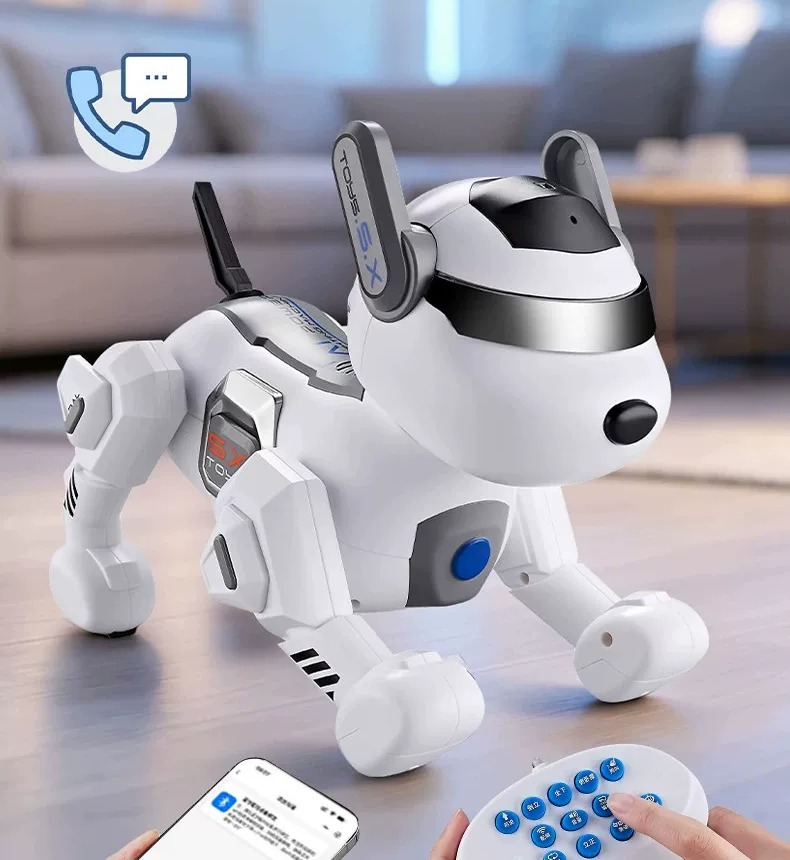
The kids pairs are the liveliest part of the range. Each one is sold as a pair, two handsets in one box, usually pink and blue. The screens run 2.0 inches. Most pairs switch on and find each other by themselves, so a child can use them with no setup. The video call runs between the two handsets only. There is no network, no account, and no app to install, which is exactly what a parent wants to hear.
| Model | What it is | Price |
|---|---|---|
| JYF1130 | Kids pair, long-range outdoor play, parent-child toy | $5.95 |
| 007 | 2.0-inch kids video pair, real-time video chat, auto pairing | $12.85 |
| D3 | 2.0-inch screen kids pair, auto pair, voice-changing function | $12.99 |
| Kids Walkie-Talkie 3km | Kids pair with display and flashlight, 3 km supplier claim | $12.99 |
| JK300 | 2.0-inch kids video pair, Type-C port, 100 m indoor range | $13.06 |
| ED2 | Kids video pair with camera and voice changer, pink and blue | $13.60 |
| ED6 | Kids video pair, dual camera, voice call, pink and blue | $15.40 |
| K12 | 2.0-inch IPS screen kids pair, 2.4G WiFi remote intercom | $16.69 |
| D2 | Video-call kids pair, HD screen, pink and blue | $17.99 |
The D2 at $17.99 is the top of the kids range, and it is also one of the two hand-listed models in the category, with a full English listing and verified stock. The Kids Walkie-Talkie 3km at $12.99 is the other hand-listed model. It carries a display and a flashlight, and its name carries a 3 km range claim from the supplier. Treat that number the way you would treat any toy radio range claim: it is an open-field number, measured with a clear line of sight and no buildings in the way. In a house, a garden, or a park with trees, the real range is shorter. The JK300 is more honest about it, and the honesty helps: its listing says 100 m indoors. A buyer who reads that knows what they are getting.
Three details decide which kids pair to stock. First, the screen: every video pair here has a 2.0-inch screen except the JYF1130 and the 3km model, which are voice-only. A screen costs a few dollars more and sells the toy on the shelf, because a parent can see the video call working. Second, the charging port: the JK300 lists a Type-C port, which is the port most households already have cables for. Third, the extras: voice changers show up on the D3 and the ED2, dual cameras on the ED6, and a flashlight on the 3km model. None of these change the radio. They change how fun the toy feels in a child’s hands, and fun is what moves a toy off a shelf.
The JYF1130 at $5.95 deserves a note. It is the cheapest radio in the whole category, and at 36 pieces the order is $214.20. It is a plain voice pair with no screen. It works as a stocking filler, a party-bag item, or a low-risk first test of the kids range. It does not work as a flagship. A shop that wants the kids range to look serious on the shelf should lead with a screen model like the 007 or the D3 and keep the JYF1130 as the price entry.
Work radios: Baofeng, Retevis and the $10 to $28 band
The work radios come from brands your business buyers already know. Baofeng and Retevis dominate the low end of the professional market, and both are on the shelf here at wholesale prices that leave room for a reseller margin. The whole work range sits between $10.20 and $27.56, which is a narrow band, and that is good news: the choice is about features and frequency, not about stretching the budget.
| Model | What it is | Price |
|---|---|---|
| BAOFENG W-31E | Handheld intercom, UHF 400–470 MHz, EU plug | $10.20 |
| BAOFENG BF-T18 | Compact pair, VOX hands-free, European frequency, 1–10 km claim | $12.15 |
| BAOFENG BF-888H | Pair, UHF 400–470 MHz, two-way radio | $13.49 |
| BAOFENG BF-888S | Pair, UHF/VHF, flashlight, US plug | $13.56 |
| CRWSTA T70 | 5W portable mini radio, long range, EU plug | $13.75 |
| BAOFENG UV-5R | FM transceiver, dual display, rechargeable, EU plug | $13.86 |
| RETEVIS RT622 | Pair, license-free PMR, European frequency, EU plug | $21.06 |
| RETEVIS RT22S | Mini pair for restaurant, construction site, hotel | $26.62 |
| RETEVIS RT668H | Pair, hidden display screen, EU 16 channels | $27.56 |
Three models cover most first orders. The BAOFENG BF-888S at $13.56 a pair is the default pick: a pair of UHF/VHF handsets with a flashlight, sold with a US plug, at a price that lets a shop sell the pair for under $30 and still keep a margin. The BAOFENG UV-5R at $13.86 is the single-radio pick for buyers who want a transceiver with a dual display and FM reception rather than a matched pair. The RETEVIS RT22S at $26.62 a pair is the business pick: a small radio built for restaurants, hotels, and construction sites, where a radio needs to be light, simple, and easy to hand to a new member of staff.
Power is the first thing to check on a work radio. The CRWSTA T70 lists 5W, which is the top of this range and the reason its range claim runs long. The RETEVIS RT668H lists a hidden display, which keeps the front clean and the screen safe from knocks. The BF-T18 lists VOX hands-free, which lets a worker talk with both hands free — a real feature for a kitchen or a building site, not a toy extra. The UV-5R lists dual-band UHF/VHF and a dual display, which is why amateur radio buyers ask for it by name.
Plug type is the second thing to check, and it is the one that causes the most trouble. The BF-888S ships with a US plug. The W-31E, the UV-5R, the RT622, the RT668H, and the T70 ship with EU plugs. A buyer in the United States who orders the EU-plug models needs adapters, and a buyer in Europe who orders the US-plug model has the same problem. The listing states the plug on each model, so the check takes ten seconds, and it is worth doing on every order.
Frequency first: the question that decides whether a radio works for your buyer
A walkie talkie is a radio, and radios follow local rules. This is the part of the guide that saves a reseller from an unhappy customer, so it is worth reading carefully.
Europe uses PMR446, a license-free band with 16 channels. The RETEVIS RT622 says license-free PMR and European frequency right in its name, and the RT668H lists EU 16 channels. Those two are the safe picks for a European buyer who wants to switch the radios on and use them the same day. The United States uses FRS, a different license-free band, and GMRS for higher power with a license. The BF-888S and the BF-T18 carry US plugs and US-market frequency setups, which is why they fit American buyers.
The UHF 400–470 MHz models — the W-31E, the BF-888H, the UV-5R, the T70 — are dual-band or wide-band radios. They can be set to many frequencies, and that flexibility is also the risk: in some countries, transmitting on the wrong frequency needs a license, and the buyer has to check the rules where they live. A reseller does not need to be a radio lawyer. The reseller needs to ask one question before the order ships: which country will these radios be used in? Then match the model to that country. PMR models for Europe, FRS setups for the United States, and a clear note on the listing for anything else.
Range claims deserve the same honest treatment as the kids models. A 1–10 km claim, like the one on the BF-T18, is an open-field number. A 5W radio like the T70 will reach further than a low-power mini, but walls, hills, and buildings cut every claim down fast. In a hotel or a restaurant, the distance that matters is a few hundred metres through floors and walls, and any radio on this shelf handles that. Sell the range your buyer will actually use, not the number on the box.
Pairs, plugs and batteries: the details that cause complaints
Most radios here are sold as pairs, two handsets in one box, and the price on the listing is the price for the pair. That is the first thing to confirm on an order, because a buyer who expects two radios for $13.56 and gets one will complain, and a buyer who expects one and gets two will be pleasantly surprised but confused. The listings that say “2Pcs/Set” or “1 Pair” are pairs. The UV-5R, the W-31E, and the T70 are single radios, and their prices are per radio. The D2 and the 3km kids models are pairs. Say it plainly on your own listing if you resell them: pair or single, in the title, not buried in the description.
Batteries are the second detail. The work radios here are rechargeable, and most ship with a charging dock or a cable in the box. The kids pairs run on rechargeable cells too. What the box does not always include is a spare battery, and a business buyer who runs radios all day will ask for one. The store carries the accessories to answer that: a 10-way gang charger for the RETEVIS RT22 and RT622 series at $42.81 charges ten radios at once, which is the right add-on for a hotel or a restaurant that buys ten pairs.
Charging ports are the third detail. Type-C is now the common port on the newer kids models like the JK300, and it is the port buyers already have at home. Older models may use a barrel plug or a cradle. If your buyer is a school or a parent, Type-C is a selling point worth naming. If your buyer is a business, the cradle or gang charger matters more than the port.
Accessories are half the category — sell them as add-ons
Fifty-two of the 85 products in the Walkie-Talkies category are accessories, and they are not filler. A fleet buyer who orders 36 pairs of radios will also need programming cables, headset adapters, spare antennas, and cases. The store stocks USB programming cables for Motorola, Baofeng, Kenwood, Hytera, and TYT radios from $1.51 to $22.70, U94 PTT headset adapters from $6.25 to $17.47, a 10-way gang charger at $42.81, and waterproof cases from $1.62. The programming cables are the interesting one: a business that buys radios in bulk usually wants them all set to the same channels, and the cable is what makes that possible.
Two warnings belong here. First, the accessories are brand-specific. A programming cable for a Motorola GP340 does not fit a Baofeng UV-5R, and a headset adapter for a Hytera does not fit a Kenwood. The listings name the compatible models, so match them before you add them to an order. Second, some accessories look like radios at a glance. A $0.60 keypad, a $1.29 silicone case, and a $2.45 speaker microphone are parts, not radios. They sell well as add-ons, and they sell badly as the main item in a radio order.
The right way to use the accessories is as a second line on the quote. Radios first, then one line for the charger or the cable the buyer needs, with the price next to it. A hotel that buys 36 RT22S pairs and one gang charger spends $958.32 on radios and $42.81 on the charger, and the charger is the item that makes the radios usable on day one. Buyers who kit out sites and vehicles often add emergency radios to the same order; the emergency radio guide covers 13 hand-crank and solar models the same way.
Three starter orders that sell
A starter order is 36 pieces of three models. That is the store minimum order, 36 pieces, and it is also a sensible first test: enough stock to sell, small enough to learn from. All three orders below use prices checked live on 2026-11-28.
Kids toy starter — $1,329.48. 36 JYF1130 pairs at $5.95 ($214.20), 36 Kids Walkie-Talkie 3km pairs at $12.99 ($467.64), and 36 D2 video-call pairs at $17.99 ($647.64). Three price points, one low, one middle, one top. A toy shop can put the JYF1130 by the till, the 3km model on the toy shelf, and the D2 as the gift-box item. The total is $1,329.48 for 108 pairs.
Work starter — $1,354.32. 36 BAOFENG W-31E radios at $10.20 ($367.20), 36 BAOFENG BF-888S pairs at $13.56 ($488.16), and 36 BAOFENG UV-5R radios at $13.86 ($498.96). One cheap single, one cheap pair, one transceiver with a display. A shop that sells to small businesses, farms, or outdoor groups can cover three kinds of buyer with one order. The total is $1,354.32.
Business starter — $2,708.64. 36 RETEVIS RT622 pairs at $21.06 ($758.16), 36 RETEVIS RT22S pairs at $26.62 ($958.32), and 36 RETEVIS RT668H pairs at $27.56 ($992.16). Three Retevis models, all aimed at restaurants, hotels, and sites. Add one RTC22T 10-way gang charger at $42.81 and the order is $2,751.45, with charging covered for the first ten pairs. The total for the radios alone is $2,708.64.
Pick the starter that matches your customers. A toy shop should not buy the business starter, and a hotel supplier should not buy the kids starter. The radios are cheap enough that a wrong first order is not a disaster, but a right first order is what brings the buyer back for a second one.
How ordering works at QDD
Ordering from QDD Wholesale is built for bulk buyers. The minimum order is 36 pieces per product. Payment is by bank transfer (T/T). There is no online card checkout and no PayPal, which is a deliberate choice for wholesale: large orders go through a bank, and the order is confirmed once the transfer lands. Shipping is quoted after the order, because 36 pairs of radios weigh and pack very differently from 36 single radios, and a flat rate would be wrong for one of them.
To order, open the product page and click Send Inquiry. The form asks for a name, an email address, a quantity, and a message. The quantity defaults to the minimum order of 36. Write the country the radios will be used in, and the plug type needed, in the message. That one line saves a round of emails and gets the right model on the first quote. Inquiries go straight to the sales team, and the reply comes within 24 hours with a quote.
If you are new to radios, say so in the message. The team will match the model to your country and your use — PMR for Europe, the right setup for the United States, a kids pair for a toy shop, a Retevis pair for a hotel. A short message with the country, the use, and the quantity gets a faster and more accurate quote than a long message with no details.
What not to buy
A short list of mistakes, learned from the category itself.
Do not buy a kids video pair for a business. The range is short, the shell is plastic, and the video call only works between the two handsets in the box. A hotel that buys them will be back within a week asking for real radios.
Do not buy a UHF 400–470 MHz radio for a buyer who wants to switch it on and use it with no setup. The wide-band models are flexible, and flexibility means someone has to set the frequency. For a buyer who wants no setup, pick a PMR model for Europe or a matched pair for the United States.
Do not buy accessories as if they were radios. A programming cable, a headset adapter, and a keypad are useful, but none of them talks to another radio. Check the category listing: if the name says cable, adapter, case, mount, or charger, it is an add-on, not a radio.
Do not chase the lowest price in the category without reading the name. The cheapest items in the Walkie-Talkies category are parts, not radios, and the cheapest real radio is the JYF1130 at $5.95. A $1.51 cable is a good add-on and a bad main order.
Do not order a US-plug model for Europe, or an EU-plug model for the United States, without adapters in the same order. The plug is printed on every listing. Ten seconds of checking saves a parcel that cannot be charged.
A shelf that earns its space
Walkie talkies are a steady wholesale line, not a fad. Schools, hotels, restaurants, building sites, and parents buy them every year, and the reasons do not change: people need to talk across a building, a site, or a garden, without a phone contract and without a monthly bill. The radios on this shelf cover that need from $5.95 to $27.56, in pairs and singles, for kids and for work, for Europe and for the United States.
The buying decision comes down to four questions. Who is the radio for, a child or a worker? Which country will it be used in? Pair or single? US plug or EU plug? Answer those four, pick the model that fits, and order 36 pieces to start. The kids starter at $1,329.48, the work starter at $1,354.32, and the business starter at $2,708.64 are all on the shelf now, priced as listed, ready to quote. Send an inquiry with the country and the use, and the quote comes back within 24 hours.